








 English
  Français
  Español


Content
- 1 The Short Answer: It Depends on the Surface Texture
- 2 Why Composite Decking Gets Slippery
- 3 How Composite Compares to Other Decking Materials
- 4 Surface Texture Makes the Biggest Difference
- 5 Slip Resistance Ratings: What the Numbers Mean
- 6 High-Risk Situations to Watch For
- 7 How to Make Your Composite Deck Less Slippery
- 8 What to Look for When Buying Composite Decking for Wet Areas
- 9 The Bottom Line
The Short Answer: It Depends on the Surface Texture
Composite decking can be slippery when wet, but most modern products are engineered to minimize this risk. The degree of slip resistance varies significantly based on the board's surface texture, finish type, and whether it has any anti-slip features built in. A smooth-capped composite board can become quite slick in rain, while an embossed or brushed-texture board typically maintains far better grip underfoot.
The slip risk is real but manageable. Understanding what drives it — and what you can do about it — will help you choose the right product and maintain a safe outdoor surface year-round.
Why Composite Decking Gets Slippery
Composite decking is made from a blend of wood fiber and plastic — typically polyethylene or PVC. The plastic component is what introduces slipperiness. When water sits on a plastic-rich surface, it creates a thin lubricating film that reduces friction, much like wet tile or polished concrete.
Several factors compound the problem:
- Algae and mildew growth: Organic matter that accumulates on the surface dramatically reduces grip. A deck with visible green or black staining is typically far more slippery than a clean one.
- Smooth cap finishes: Fully encapsulated boards with a glossy or lightly textured cap offer less friction than boards with deep wood-grain embossing.
- Standing water: Boards installed without proper drainage gaps trap water rather than shedding it, worsening the slip hazard.
- Temperature: In near-freezing conditions, wet composite surfaces can develop a thin ice film that creates extreme slip risk.
How Composite Compares to Other Decking Materials
Slip resistance is best understood in context. Here's how composite decking stacks up against common alternatives when wet:
| Decking Material | Wet Slip Risk | Notes |
|---|---|---|
| Pressure-treated wood | Moderate | Natural grain provides grip; gets slippery with algae or when worn smooth |
| Hardwood (e.g., Ipe) | Low to Moderate | Dense grain is grippy when clean; oils can reduce friction over time |
| Composite (smooth cap) | Moderate to High | Low texture = less friction when wet |
| Composite (embossed texture) | Low to Moderate | Deep grooves channel water and improve grip significantly |
| PVC decking | Moderate to High | All-plastic surface; relies entirely on texture for grip |
| Concrete or tile | High (if smooth) | Requires anti-slip coating or brushed finish to be safe when wet |
The takeaway: textured composite decking performs on par with natural wood in wet conditions, and significantly better than smooth composite or PVC boards.
Surface Texture Makes the Biggest Difference
When shopping for composite decking with wet-weather safety in mind, surface texture is the single most important specification to evaluate. Manufacturers use several approaches:
Deep Wood-Grain Embossing
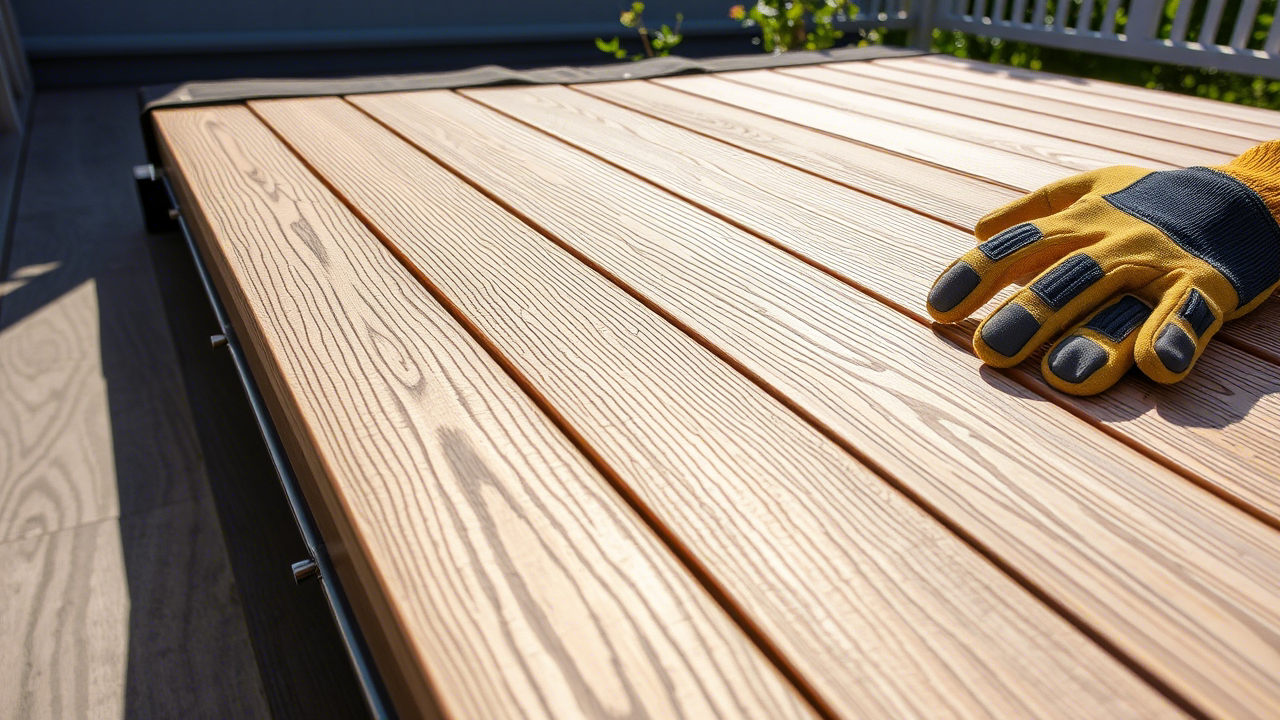
Boards pressed with a deep, irregular wood-grain pattern create micro-ridges that physically interrupt the water film, improving traction. The more pronounced the texture, the better the wet grip. Look for embossing depth of at least 0.5mm for meaningful slip resistance improvement.
Brushed or Wire-Brushed Finishes
Some boards are mechanically brushed after manufacturing to create a fine, consistent texture across the surface. This approach mimics the feel of natural wood grain and is particularly effective at reducing slipperiness because it creates thousands of small grip points rather than just wider grooves.
Grooved Undersides (Reversible Boards)
Some composite boards are reversible — one side has a smooth aesthetic finish and the other has a ribbed, channeled surface intended for higher-traction applications like boat docks or pool surrounds. If slip resistance is a priority, install the textured side up.
Anti-Slip Additives in the Cap Layer
Higher-end composite products incorporate mineral or polymer anti-slip particles directly into the cap layer during manufacturing. These particles maintain their grip properties even after years of foot traffic and weathering, unlike topical coatings that wear off over time.
Slip Resistance Ratings: What the Numbers Mean
Slip resistance is measured using the Coefficient of Friction (COF). A higher COF means more friction and better grip. Industry guidelines offer useful benchmarks:
- COF below 0.42: Generally considered slippery and unsuitable for wet areas
- COF 0.42–0.60: Acceptable for general pedestrian use; typical range for most composite decking
- COF above 0.60: Recommended for areas with frequent water exposure (pool decks, boat docks)
When evaluating products, ask manufacturers for wet COF test results specifically — dry COF figures are largely irrelevant to the slipperiness concern. Many reputable composite decking manufacturers publish these results, and a wet COF above 0.50 is a reasonable minimum benchmark for residential use.
High-Risk Situations to Watch For
Even well-textured composite decking carries elevated slip risk in specific situations. Being aware of these conditions helps you take targeted precautions:
- Shaded decks: Areas that don't receive direct sunlight stay damp longer and are prone to algae and moss growth, both of which dramatically reduce friction.
- Pool and hot tub surrounds: Constant water splashing combined with sunscreen and body oils on the surface creates a very slippery mix.
- Leaf litter and debris: Decomposing organic material on the deck surface creates a slick, almost soapy layer that can be more dangerous than rain alone.
- Morning dew and frost: Thin moisture films from overnight condensation can be just as slippery as rain and are often overlooked.
- Older, worn boards: Surface texture degrades over time with heavy foot traffic, gradually reducing the slip resistance the board had when new.
How to Make Your Composite Deck Less Slippery
Whether you're dealing with an existing deck or planning a new one, there are practical steps to reduce slip risk significantly.
Clean the Deck Regularly
This is the most impactful single action. Algae and mildew are far more slippery than plain wet composite. A semi-annual cleaning with a composite-safe deck cleaner and a stiff brush removes the biological growth that causes the worst slip hazards. Avoid pressure washing at high settings — it can erode the cap layer and reduce texture.
Apply an Anti-Slip Coating
Water-based anti-slip additives or grit-infused deck sealers can be applied to existing composite boards. Products containing aluminum oxide or polymer grit particles provide durable traction improvement. Expect to reapply every 1–3 years depending on traffic and weather exposure. Always confirm compatibility with your specific composite product before applying.
Add Anti-Slip Strips or Treads
Self-adhesive anti-slip tape or rubber tread strips are an inexpensive and immediate solution, especially effective on deck stairs where fall risk is highest. Marine-grade non-skid tape (typically grit-coated with an aggressive adhesive) can be found at hardware stores and typically lasts 2–5 years outdoors before needing replacement.
Ensure Proper Drainage During Installation
If you're installing a new deck, follow manufacturer spacing recommendations for drainage gaps — typically 3–6mm between boards. This allows water to drain rather than pool on the surface. A slight pitch of 1–2% away from the house also helps water run off naturally.
Use Outdoor Rugs Strategically
Outdoor rugs with a non-slip backing can be placed in high-traffic transition zones — doorways, stair landings, areas around outdoor furniture. Choose rugs that drain quickly and won't trap moisture underneath, as a wet rug sitting on composite can itself become a mold-growth source over time.
What to Look for When Buying Composite Decking for Wet Areas
If slip resistance is a primary concern — for example, if you have young children, elderly family members, or are building around a pool — use this checklist when evaluating products:
- Ask for the wet COF rating — aim for 0.50 or higher
- Inspect the board in person and run your hand across it — deep texture should be clearly felt, not just visible
- Ask whether the texture is in the cap layer or just surface-pressed — cap-layer texture lasts longer
- Check whether the product has any anti-slip mineral additives built into the formula
- Confirm the warranty covers fade and stain — a well-protected cap layer also tends to resist algae growth better
- Read independent reviews specifically from users in wet climates or with poolside installations
The Bottom Line
Composite decking is not inherently more dangerous than wood in wet weather, but it does require the right product choice and basic maintenance to stay safe. Textured, embossed boards with a wet COF above 0.50 perform well in rain and are suitable for most residential applications including around pools. Smooth-finish boards, neglected surfaces covered in algae, or boards with clogged drainage gaps are the real culprits behind slippery decks.
The practical formula for a safe composite deck: choose a deeply textured product, clean it twice a year, keep drainage clear, and address any problem spots with anti-slip tape or coating. Done right, composite decking can be among the safest outdoor flooring surfaces available — even in the rain.