










 English
  Français
  Español


Content
Why choosing the right deck color matters
Selecting a deck color is more than aesthetics. The color affects perceived space, heat absorption, visible wear, maintenance frequency, UV fade, and how the deck connects visually with your house, landscaping, and outdoor living zones. This guide walks through practical steps to choose a color that looks great and performs well over time.
Assess your home's exterior and surroundings
House color and trim
Start by photographing the house exterior in natural light. Identify the dominant wall color, trim color, and any accent hues. The deck should either harmonize (blend) or contrast (stand out) intentionally. Harmonizing yields a cohesive look; contrasting can make the deck a focal point.
Landscape, hardscape, and neighborhood context
Consider nearby paving, stone, brick, and the dominant plant tones. A deck next to warm clay pavers pairs well with warm wood tones; a deck near cool gray stone often benefits from gray or cool-brown stains. Also note HOA or neighborhood norms that may limit extreme contrasts.
Sunlight, shade and climate
Sun exposure changes how color reads and how hot the surface becomes. Dark colors in full sun absorb more heat and show fading faster. In cool climates you can choose darker tones safely; in hot, sunny climates prefer medium or lighter tones or choose coatings with UV protection.
Match deck material and finish to color
Natural wood species
Different woods react differently to stains and paints. Cedar and redwood accept transparent stains that enhance grain; pressure-treated pine takes semi-transparent or solid stains but may blotch without a conditioner. Choose a color depth (transparent → semi → solid) that matches the wood’s grain and your desired look.
Composite and PVC decking
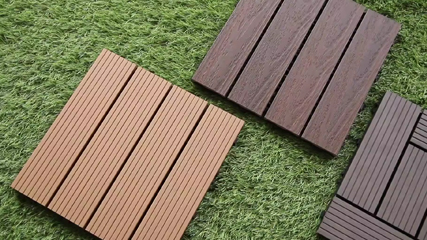
Composite decking often comes in factory colors; painting is usually unnecessary and sometimes not recommended. If repainting or resurfacing is planned, use products and colors approved by the decking manufacturer and consider heat retention—darker composites get hotter.
Choose between stain, paint, or oil
Each finish has trade-offs: transparent/semi-transparent stains highlight grain but need more frequent reapplication; solid stains and paints hide grain and provide longer cosmetic life but can peel if the deck moves or is not prepped correctly; oil finishes penetrate and maintain natural texture but require frequent upkeep.
- Transparent/semi-transparent stain — natural look, moderate maintenance.
- Solid stain/paint — hides imperfections, longer cycle, higher prep costs.
- Oil/penetrating finish — enhances grain, highest frequency maintenance.
Use color theory and practical palettes
Think in three layers: the house (background), the deck (midground), and accents (furniture, planters, railings). Neutrals are versatile; warm neutrals with wood tones work for traditional homes, cool neutrals and deeper grays fit modern designs. Use accent colors for railings or tile to break monotony.
| House Color | Recommended Deck Colors | Finish Type |
| White or Cream | Light gray, warm tan, natural cedar | Semi-transparent or light solid |
| Warm Beige / Taupe | Medium brown, honey, soft redwood | Transparent or semi-transparent |
| Gray or Cool Tones | Charcoal, cool brown, weathered gray | Solid stain or gray-toned semi |
| Brick or Red Accents | Deep brown, dark gray, muted greens | Semi-solid or solid stain |
Test samples and evaluate in different light
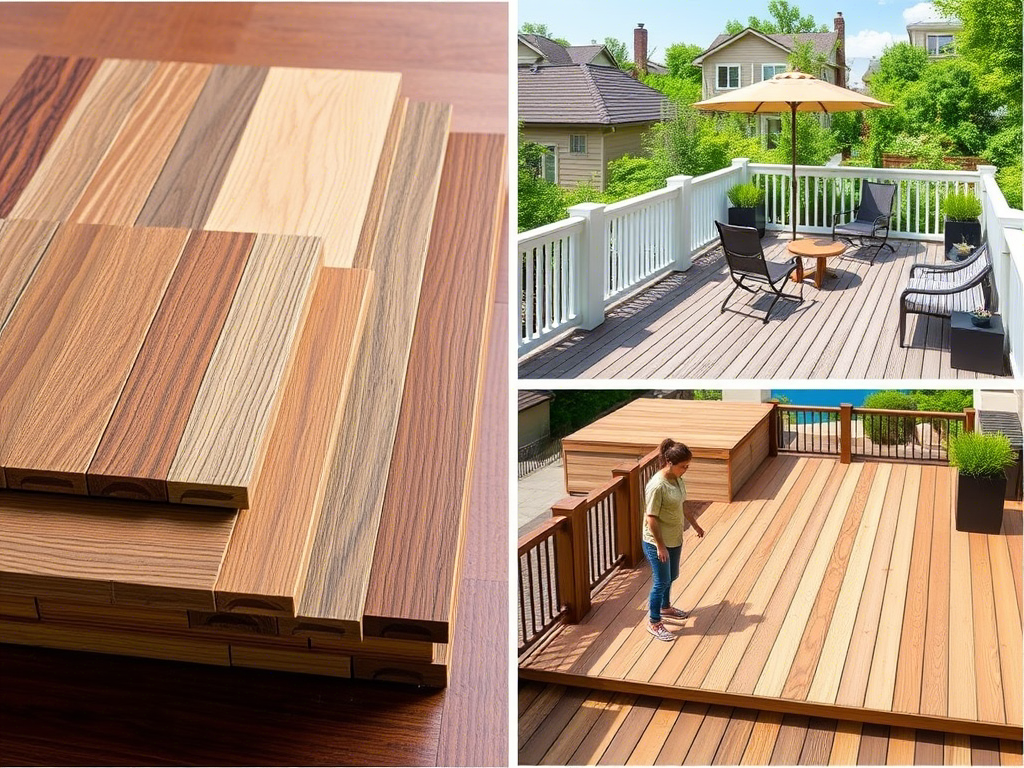
Never choose from a small swatch alone. Apply full-size samples to a discrete area of the deck or on large boards laid next to the deck. Observe samples at sunrise, midday, and dusk and after 24–72 hours once coatings cure. Weather, wood absorption, and surface te