






 English
  Français
  Español


Content
- 1 Quick comparison: deck options other than wood
- 2 Composite decking: the best all-around non-wood option
- 3 PVC decking: best for water, salt air, and stain resistance
- 4 Aluminum decking: strongest, fire-smart, and cool underfoot
- 5 Porcelain pavers or tile: ideal for rooftops and waterproof decks
- 6 Fiberglass decking: a true waterproof walking surface
- 7 Concrete and stone: best for ground-level “deck-like” outdoor living
- 8 How to choose the right non-wood deck material for your project
- 9 Conclusion: the most practical deck options other than wood
Best deck options other than wood are composite and PVC for most homes because they combine long service life with low maintenance. If you want maximum heat resistance and structural strength, aluminum is the standout. For rooftop or waterproof decks, porcelain pavers or fiberglass systems often perform best.
Below is a practical comparison of non-wood decking materials—what they cost, how long they last, what they feel like underfoot, and where each one makes the most sense.
Quick comparison: deck options other than wood
Use this as a fast shortlist. Numbers vary by brand, thickness, and regional labor rates, but the ranges are reliable for budgeting and planning.
| Material | Typical installed cost | Expected service life | Maintenance level | Best use-case |
|---|---|---|---|---|
| Composite (capped) | Mid to high | 25–50 years | Low | Most residential decks |
| PVC (100% plastic) | High | 30–50+ years | Very low | Wet, coastal, heavy-splash areas |
| Aluminum decking | High | 40–60 years | Very low | Hot climates, long spans, fire-prone zones |
| Porcelain pavers / tile (on pedestals) | High | 30–50 years | Low | Rooftops, waterproof decks |
| Fiberglass (walkable membrane) | Mid to high | 20–35 years | Low | Balconies, over-living-space decks |
| Concrete (patio-style deck surface) | Low to mid | 30–50+ years | Low | Ground-level terraces, modern looks |
If you want one “safe bet,” choose capped composite unless your deck is routinely wet (lean PVC) or you need superior heat/fire performance (lean aluminum).
Composite decking: the best all-around non-wood option
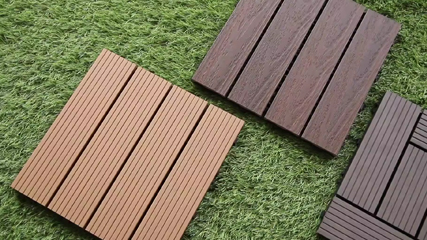
Composite decking is typically a mix of plastic and wood fibers, often with a protective “cap” that improves stain and fade resistance. In day-to-day ownership, it wins because it looks finished without yearly sealing.
Where composite performs best
- Family decks with grills and frequent foot traffic (good scratch and stain resistance when capped).
- Homes that want a wood-like look without refinishing.
- Projects where predictable color and uniform boards matter.
Practical cautions
- Heat retention: darker boards can get noticeably hotter in direct sun; choosing lighter colors can materially improve barefoot comfort.
- Expansion: composites move with temperature; follow manufacturer gap/fastener rules to avoid buckling.
- Structure: most composites require joists at tighter spacing than some wood decks for a firm feel.
PVC decking: best for water, salt air, and stain resistance
PVC decking is a non-wood option made primarily from plastic, so it will not absorb water and is highly resistant to mold and rot. If your deck routinely gets soaked—pool surrounds, coastal exposure, or heavy rain—PVC can be a strong long-term choice.
- Pool and spa decks (chlorine splash and wet feet).
- Coastal homes where salt spray accelerates corrosion and organic decay.
- Food-and-grease zones where frequent wipe-downs are expected.
Practical cautions
- Movement: PVC can expand/contract more than composite; detailing and fastener systems matter.
- Look/feel: premium lines mimic wood better than budget lines; evaluate samples in outdoor light.
Aluminum decking: strongest, fire-smart, and cool underfoot
Aluminum decking is a non-wood option that excels in structural strength and longevity. It is also naturally resistant to insects and rot, and it can be engineered with interlocking, water-shedding profiles.
Where aluminum shines
- Fire-prone regions: aluminum does not ignite, and ember exposure is less problematic than many organic surfaces.
- Long spans and elevated decks that benefit from stiffness and a solid feel.
- Hot climates: many owners report improved barefoot comfort compared with dark composite boards, especially with lighter finishes.
Trade-offs to plan for
- Cost: typically at the top end once specialty trims and rail systems are included.
- Acoustics: rain and footfall can sound different than wood or composite; under-deck insulation or design choices can help.
If you need maximum durability with minimal upkeep, aluminum is often the “last deck” choice—especially on high, exposed structures.
Porcelain pavers or tile: ideal for rooftops and waterproof decks
Porcelain pavers (or exterior-rated tile) are strong deck options other than wood when the deck surface must be stable, water-managed, and easy to clean. A common approach is pedestal systems that create a level walking surface with drainage underneath.
Best-fit scenarios
- Rooftop decks where a waterproof membrane must remain accessible for inspection and repair.
- Modern design goals (large-format stone looks, clean lines).
- High-traffic entertaining areas where stain cleanup matters.
Practical cautions
- System complexity: pedestals, membranes, and edge details must be compatible to avoid leaks.
- Weight: check structural capacity, especially on balconies and rooftops.
Fiberglass decking: a true waterproof walking surface
Fiberglass systems create a continuous, walkable membrane—useful when the deck is over finished space or when water intrusion cannot be tolerated. Unlike board decks, the surface itself is the waterproof layer.
Where it makes the most sense
- Second-story decks above living rooms, garages, or walkouts.
- Balconies where drainage and waterproofing details are difficult to execute with boards.
What to watch for
- Installer skill: performance depends heavily on surface prep and detailing at edges and penetrations.
- Refinishing cycle: most systems eventually need a new topcoat; budgeting for a refresh is prudent.
Concrete and stone: best for ground-level “deck-like” outdoor living
If your project is ground-level, a concrete or stone terrace can outperform elevated decking in stability and longevity. While not a traditional joist-and-board deck, it is often the most cost-effective way to create a durable outdoor platform.
Practical advantages
- Durability: well-built slabs can last decades with minimal care.
- Design flexibility: stamped concrete, exposed aggregate, and large stone pavers can match many home styles.
- Low maintenance: periodic cleaning and joint maintenance are usually sufficient.
Common pitfalls
- Cracking and drainage: base preparation and slope control are the difference between a long-lasting terrace and ongoing repairs.
- Freeze-thaw regions: choose materials and jointing methods appropriate for local climate.
How to choose the right non-wood deck material for your project
Most “wrong” choices happen because one constraint was ignored: water exposure, heat, structure, or maintenance tolerance. Use the factors below to decide quickly.
Decision factors that matter most
- Water exposure: persistent wet conditions favor PVC, aluminum, or waterproofed tile/paver systems.
- Heat and sun: choose lighter colors in composite/PVC; consider aluminum where barefoot comfort is critical.
- Maintenance tolerance: if you will not stain or seal, prioritize capped composite, PVC, or aluminum.
- Structural limits: rooftop and balcony projects require careful load planning; porcelain pavers can be excellent but must be engineered.
- Use pattern: heavy entertaining and grilling benefit from stain-resistant surfaces and easy wash-down.
Rule of thumb: choose capped composite for general residential use, PVC for consistently wet conditions, and aluminum when durability, fire considerations, and stiffness are top priorities.
Conclusion: the most practical deck options other than wood
For most homeowners, capped composite offers the best balance of cost, appearance, and low maintenance. If your deck is frequently wet or near salt water, PVC is typically the safer long-term bet. If you want maximum longevity, stiffness, and a fire-smart surface, aluminum is the premium option. For rooftops or decks that must stay waterproof, porcelain pavers or fiberglass systems are often the most reliable approach.