











 English
  Français
  Español


Content
Why Homemade Cleaners Are Ideal for Composite Decking
Composite decking is engineered to resist moisture, staining, and everyday wear — but that doesn't mean it's maintenance-free. Over time, pollen, dirt, mold, mildew, and organic debris can accumulate on the surface, dulling its appearance and creating slippery conditions. The good news is that a well-made homemade cleaner for composite decking can tackle these issues effectively without the harsh chemicals found in many commercial products.
Many store-bought deck cleaners contain bleach, chlorine, or solvents that can degrade the polymer cap layer on composite decking boards, causing surface discoloration or voiding the manufacturer warranty. Homemade solutions using mild household ingredients are gentler on the material, safer for surrounding plants and pets, and significantly more cost-effective. For most routine cleaning scenarios, a simple DIY formula performs just as well — if not better — than commercial alternatives.
Understanding your deck's material composition matters before choosing any cleaner. Co-extrusion WPC decking features a protective outer shell that resists moisture and staining more effectively than standard wood-plastic composites. These boards respond especially well to gentle, pH-neutral homemade cleaners, making DIY solutions the preferred maintenance approach.
Top 3 Homemade Cleaner Recipes for Composite Decking
The following three formulas cover the most common composite deck cleaning needs — from routine dirt removal to stubborn mold and grease stains. Each recipe uses ingredients available in most households.
Recipe 1 — Everyday Soap and Water Wash
For general cleaning and routine maintenance, this is the safest and simplest option:
- 2 gallons of warm water
- 2 tablespoons of liquid dish soap (free of harsh solvents or degreasers)
Mix in a bucket and apply with a soft-bristle brush. This formula is ideal for weekly or monthly cleaning to remove dust, light stains, and surface grime without any risk of material damage.
Recipe 2 — Vinegar and Baking Soda Solution (Mold and Mildew)
When dealing with mold spots or mildew patches, a combination of white vinegar and baking soda provides mild antifungal action:
- 1 cup of white distilled vinegar
- 1 gallon of warm water
- 2 tablespoons of baking soda (add after mixing vinegar and water)
Apply directly to affected areas, allow the solution to sit for 10–15 minutes, then scrub gently and rinse. Note: avoid using undiluted vinegar, as its acidity can affect the surface sheen of certain composite finishes with extended exposure.
Recipe 3 — Oxygenated Bleach Deep Clean (Tough Stains)
For deeply embedded stains, tannin marks from leaves, or seasonal deep-cleaning sessions, oxygen-based bleach (sodium percarbonate) is the most effective homemade-compatible option:
- 1 gallon of warm water
- ¼ cup of oxygen bleach powder (unscented, dye-free)
Dissolve the powder fully before applying. Let it dwell on stained areas for 15–20 minutes before scrubbing with a medium-bristle brush. This formula breaks down organic staining compounds without the chlorine that damages composite surfaces.
| Recipe | Best For | Frequency | Surface Safety |
|---|---|---|---|
| Soap and Water | Routine dirt, dust, pollen | Weekly / Monthly | Excellent |
| Vinegar + Baking Soda | Mold, mildew, light stains | As needed | Good (diluted only) |
| Oxygen Bleach | Deep stains, tannins, seasonal clean | 1–2 times/year | Good (follow dilution) |
Step-by-Step Cleaning Process
Regardless of which recipe you choose, following a consistent cleaning process ensures the best results while protecting your deck's surface and structure.
- Clear the deck surface. Remove all furniture, planters, rugs, and accessories. This gives you full access to every board and gap between them.
- Remove loose debris. Use a broom or leaf blower to sweep away leaves, dirt, and loose material. Pay close attention to the gaps between boards, where organic material tends to collect and promote mold growth.
- Pre-rinse with water. Lightly hose down the entire deck to wet the surface. This prevents the cleaning solution from drying too quickly and helps loosen surface dirt before scrubbing.
- Apply your chosen homemade cleaner. Work in manageable sections — roughly 6 to 8 square feet at a time. Apply the solution generously and allow it to dwell for the recommended time.
- Scrub along the grain. Using a soft- to medium-bristle brush, scrub in the direction of the board grain. Scrubbing against the grain can create micro-scratches that trap future dirt.
- Rinse thoroughly. Rinse each section completely before moving to the next. Leftover soap or cleaning solution residue can create a slippery film or attract more dirt over time.
- Allow to dry fully. Let the deck air dry for at least 24 hours before replacing furniture. Walking on a wet composite surface in certain footwear can leave scuff marks.
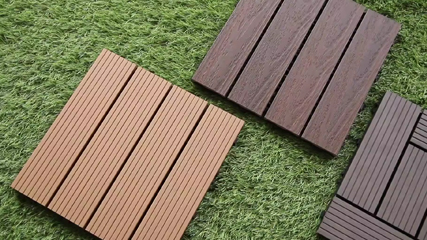
For modular installations such as DIY deck tiles, it may be more practical to lift individual tiles, clean underneath them, and clean each tile separately to ensure thorough results and prevent moisture retention beneath the surface.
What to Avoid When Cleaning Composite Decking
Knowing what not to use is just as important as knowing the right cleaning formula. Several common cleaning approaches that work well on wood decks can cause lasting damage to composite materials.
- Chlorine bleach: Breaks down the polymer binding agents in composite boards and causes fading, especially on darker-colored decking. Even diluted chlorine bleach is not recommended by most composite manufacturers.
- Pressure washing at high PSI: Pressures above 1,500 PSI can erode the surface cap layer, expose the wood fiber core to moisture, and create permanent surface texture damage. If using a pressure washer, keep it below 1,200 PSI and maintain a fan tip at least 12 inches from the surface.
- Oil-based soaps or degreasers: These leave a residue that attracts dirt and can make the surface permanently slippery.
- Abrasive scrubbers or steel wool: Metal brushes and scouring pads scratch the surface finish, dulling the appearance and creating pathways for moisture absorption.
- Undiluted vinegar or citric acid: While diluted vinegar is safe, concentrated acidic solutions can etch the surface of certain composite finishes, particularly those with lighter color tones.
- Ammonia-based cleaners: Ammonia weakens the structural integrity of the composite polymer shell over repeated applications.
When seasonal challenges arise — such as ice removal in winter — the same caution applies. Refer to recommended guidance on ice melt and winter care for composite decking to avoid accidental surface damage from de-icing chemicals.
Routine Maintenance Tips for Long-Lasting Beauty
A cleaning routine is most effective when it is part of a broader maintenance strategy. Composite decking is designed to last 25 years or more with proper care, but neglect accelerates surface wear and increases cleaning difficulty over time.
- Sweep regularly: A quick sweep every one to two weeks prevents organic debris from decomposing between boards and feeding mold colonies.
- Address spills immediately: Food spills, grease, and tannin-rich liquids (red wine, coffee) are far easier to clean when fresh. Allowing them to dry and set increases the likelihood of permanent staining.
- Use furniture pads: Place protective pads under table and chair legs to prevent surface scratches. Metal furniture bases are particularly damaging to composite finishes.
- Ensure proper drainage: Standing water — especially in areas where boards are tightly packed — increases the risk of mold and mildew. Make sure there is adequate spacing between boards and that water can flow freely off the deck surface.
- Schedule a deep clean twice a year: Spring cleaning removes winter buildup; fall cleaning clears leaf tannins and prepares the surface for colder temperatures. Using the oxygen bleach formula for these sessions keeps the deck looking fresh season after season.
- Inspect for mold after wet seasons: After prolonged rain or high humidity periods, check shaded areas and spots with restricted airflow. Early intervention with the vinegar solution prevents mold from spreading across larger surface areas.
Consistent, light maintenance is always more effective — and less labor-intensive — than infrequent heavy cleaning. When combined with a quality composite material that is engineered for outdoor durability, a simple homemade cleaner routine is all that is needed to keep your deck looking its best for decades.