






 English
  Français
  Español


Content
A room can have beautiful furniture, perfect lighting, and a well-chosen color palette — and still feel wrong. The eye stops unexpectedly. Something interrupts the flow. More often than not, the missing ingredient is rhythm, and specifically, the type of rhythm designers call transition.
Unlike other design tools that add visual interest through contrast or repetition, transition works by removing friction. It creates spaces that feel naturally navigable — where your gaze moves from one corner to the next without being asked to.
What Rhythm Actually Does in a Room
Rhythm in interior design is the organized movement of the eye through a space. Think of it less as decoration and more as choreography — a silent set of instructions that tells your gaze where to go next, how fast, and in what order.
When rhythm is working, you feel it without noticing it. The room seems balanced, coherent, and easy to be in. When it breaks down — through abrupt color shifts, mismatched textures, or disconnected shapes — the space feels restless, even if you can't pinpoint why.
Designers typically work with six main types of rhythm: repetition, gradation, contrast, alternation, radiation, and transition. Each serves a different purpose. Repetition builds stability. Contrast creates focal points. Transition, however, does something subtler and often more powerful — it sustains movement.
Transition: The Rhythm That Moves Without Asking
Transition rhythm leads the eye through a continuous, uninterrupted flow from one area to another. There are no abrupt stops, no visual jolts — just a quiet, steady progression that makes the whole room feel like a single connected experience rather than a collection of separate decisions.
What makes transition different from other rhythm types is its reliance on shape rather than repetition or color. A recurring curve, for example, doesn't announce itself. It simply pulls your eye along its arc, and before you know it, you've moved across the room. A straight-edged space with no connecting shapes, on the other hand, feels compartmentalized — each area exists in isolation.
Interior designer Chad Dorsey has described rhythm in this terms: a natural flow and fluidity of moving between spaces both with your eye and your mind — a visual and mental harmony that avoids abrupt transitions or stops and starts. That description captures exactly what transition rhythm is designed to achieve.
Shapes and Lines That Create Transition
Curved lines are the primary vehicle for transition rhythm. An arched doorway carries the eye from one room to the next without the visual stop that a squared frame creates. A rounded sofa pulls your gaze along its back and outward into the broader room. A winding hallway path turns navigation into an experience rather than a function.
But transition isn't limited to furniture or architectural arches. It also appears in:
- Continuous flooring that runs uninterrupted from room to room, eliminating the hard stop of a threshold
- Wall cladding installed in long horizontal or vertical runs, directing the eye along its length
- Ceiling panels with directional grooves or grain that draw your gaze toward a focal point
- Rounded edges on cabinetry, countertops, and built-ins that prevent visual corners from acting as dead ends
- Open-plan layouts where the absence of walls allows the eye to travel freely across connected zones
The underlying principle is always the same: give the eye a path that doesn't require effort to follow. Curved lines and continuous surfaces do exactly that.
Building Transition Rhythm Across Three Surfaces
The most effective way to think about transition rhythm is surface by surface. Floors, walls, and ceilings each contribute independently to the visual flow of a space — and when all three are considered together, the results are noticeably more cohesive.
The Floor: Setting the Path
Flooring is the foundation of spatial rhythm. The direction a plank or panel runs controls where the eye is sent first. Boards laid lengthwise in a narrow hallway elongate the space and pull the eye toward the end. Diagonal patterns create a sense of dynamic movement. Wide-format planks with minimal seams suggest openness and continuity.
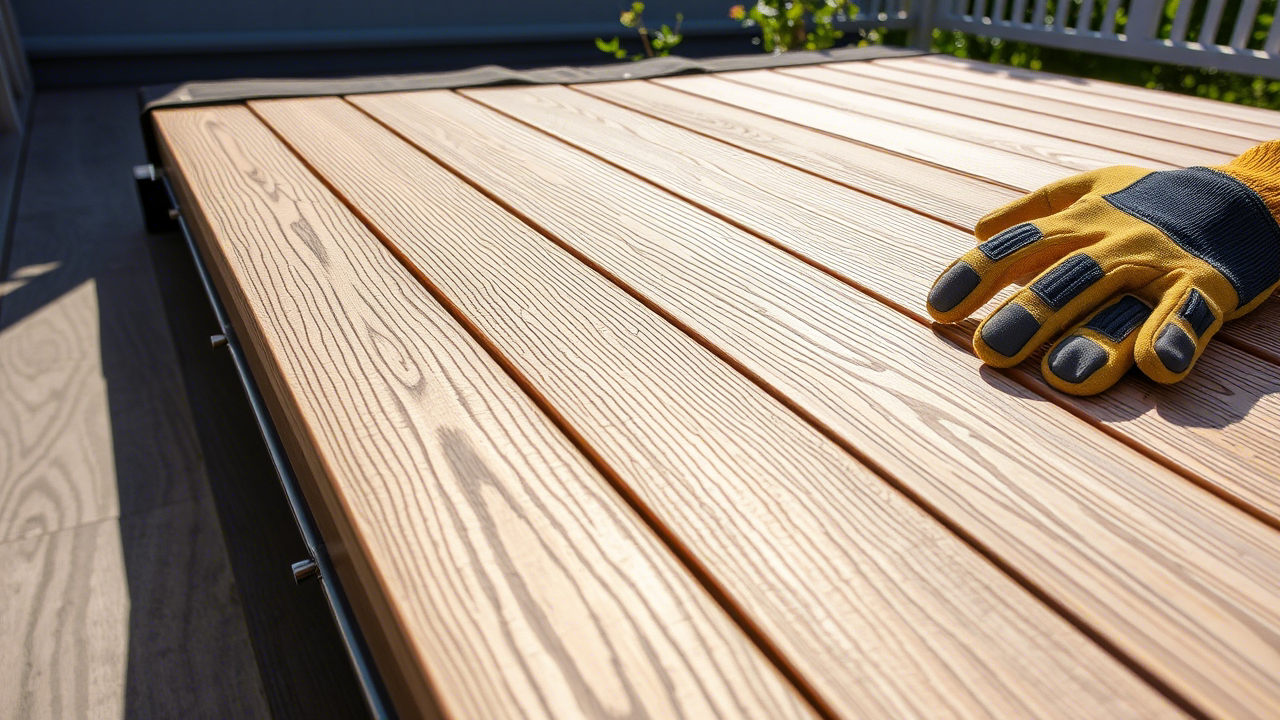
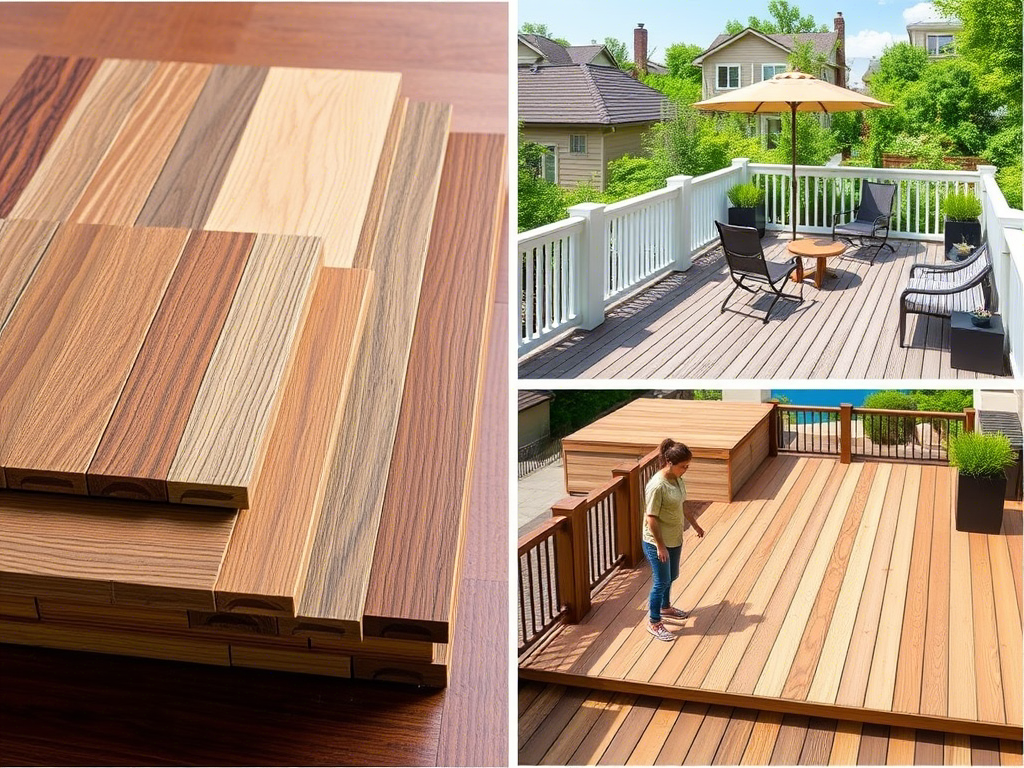
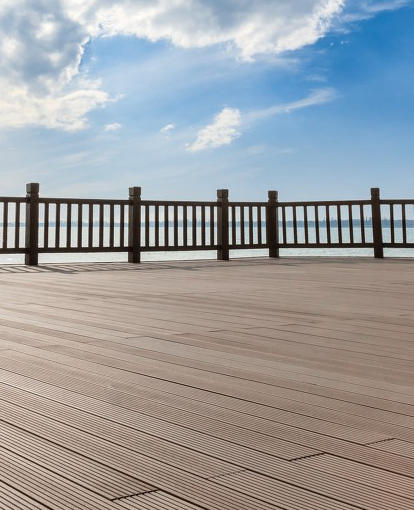
The biggest transition disruptor at floor level is an abrupt material change — a shift from hardwood to tile that introduces both a visual seam and a textural contrast the eye has to process. Using a consistent WPC composite flooring across connected areas eliminates this problem entirely. The continuous grain pattern guides the eye naturally from one zone to the next, establishing a baseline of rhythm that the rest of the room can build on.
The Wall: Sustaining the Movement
Walls are where transition rhythm often breaks down — and where it has the most potential. A room with four plain painted walls doesn't offer the eye anywhere to go. It simply bounces between surfaces with no particular direction.
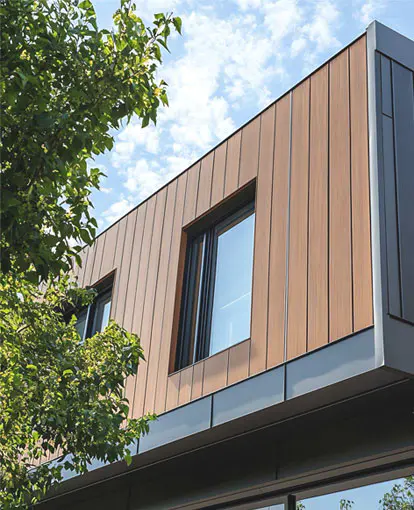
Horizontal paneling with consistent grain lines creates a natural lateral pull, making rooms feel wider and more connected. Vertical cladding draws the eye upward, adding perceived height and linking the floor plane to the ceiling. In both cases, the key is continuity: panels that run without interruption carry the eye with them. A panel that stops mid-wall, or changes texture abruptly, breaks the rhythm.
Using continuous wood-grain WPC wall cladding across interior surfaces is one of the most reliable ways to introduce transition rhythm at scale. The consistent texture and directional grain provide an uninterrupted visual path, while the natural wood appearance adds the warmth and depth that make the movement inviting rather than mechanical.
The Ceiling: Completing the Circuit
Ceilings are the most overlooked surface in transition rhythm planning — which is exactly why addressing them creates such a noticeable effect. A ceiling with directional groove patterns or linear paneling can guide the eye from one end of the room to the other, effectively extending the visual path established by the floor and walls.
When the grain or groove direction of the ceiling aligns with that of the floor, the room feels unified. The eye travels up one wall, across the ceiling, and down the other side in a continuous loop rather than stopping at the cornice and retreating.
How Material Texture and Grain Guide the Eye
Texture is rhythm's most underestimated tool. The grain of a material doesn't just look like wood — it actively directs your gaze. Fine, closely spaced grain lines move the eye quickly and smoothly. Coarser, more open grain creates a slower, more deliberate movement. Smooth surfaces let the eye glide; rough or heavily textured surfaces slow it down and pull attention inward.
This is why material selection isn't just an aesthetic decision — it's a rhythmic one. Choosing a panel or plank with a consistent, pronounced grain in a single direction gives you a reliable visual vector. Choosing one with scattered, undirectional pattern gives you visual noise instead of flow.
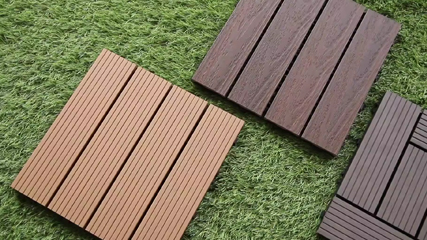
Wood-plastic composite (WPC) materials are particularly well-suited to transition rhythm because their grain can be controlled and standardized across large surface areas. Unlike natural timber, where grain varies board by board, WPC maintains a consistent visual pattern that sustains directional movement without interruption. The result is a surface that works with your design intent rather than against it — and does so without the maintenance demands of real wood.
Mistakes That Break the Flow
Even well-intentioned interiors can undermine transition rhythm without realizing it. The most common disruptions:
- Abrupt color changes at room boundaries. Switching from a warm tone in the living room to a cool neutral in the hallway creates a visual door that stops the eye rather than carrying it through. Gradual color progression — slightly lighter or darker across adjoining spaces — maintains the flow.
- Competing grain directions. Flooring laid lengthwise in one room and widthwise in the next forces the eye to recalibrate at the threshold. Where continuity isn't possible, a clear transition strip is less disruptive than an ambiguous junction.
- Too many textures in the same plane. A feature wall that mixes smooth panels, rough stone, and brushed metal in equal measure gives the eye nothing to follow. Visual interest and visual rhythm are different things — the former needs variety, the latter needs consistency.
- Ignoring scale. Small-format tiles or panels in a large open space create a high-frequency pattern that fragments the eye's movement. Larger, longer panels allow the gaze to travel further before it needs to process the next seam.
- Disconnected surface treatments. When floors, walls, and ceilings are designed independently of each other, they rarely create a unified rhythm. Transition works best when all three surfaces are considered in relation to each other from the beginning of a project.
Designing for Flow, Not Just Style
Transition rhythm is what separates an interior that looks good in photographs from one that feels good to live in. The visual logic built into curves, continuous surfaces, and consistent grain creates a kind of spatial intelligence — a room that knows where it wants to take you.
The most reliable way to build this into a project is to treat material selection as a design decision, not just a specification. The direction a plank runs, the texture of a wall panel, the groove pattern on a ceiling board — each of these is a choice about movement. Made thoughtfully, they work together to create spaces that feel unified, calm, and genuinely welcoming.
For architects, designers, and homeowners who want materials that support this kind of intentional rhythm, exploring the full range of WPC composite building materials offers a practical starting point — surfaces that bring the consistency, continuity, and natural character that transition rhythm demands.