







 English
  Français
  Español


Content
When planning an outdoor living space, two options come up again and again: the deck and the balcony. At first glance, they may seem interchangeable—both are platforms where you can enjoy fresh air without leaving home. But structurally, functionally, and financially, they are quite different. Understanding those differences helps you make a smarter decision for your property, your lifestyle, and your budget.
What Is a Deck?
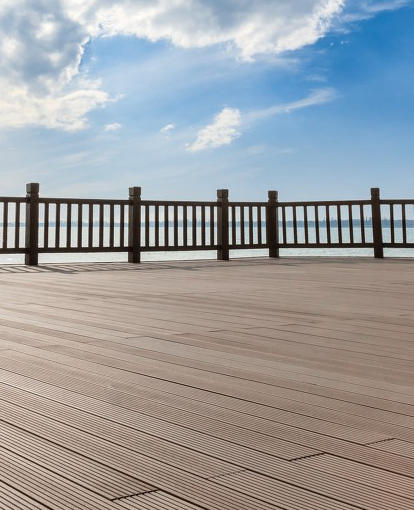
A deck is a raised outdoor platform typically attached to the back or side of a house. It sits at ground level or slightly above it, supported by posts, beams, and footings anchored into the ground. Decks are most commonly accessed through the home's main living area—usually the back door—and often include a staircase leading down to the yard.
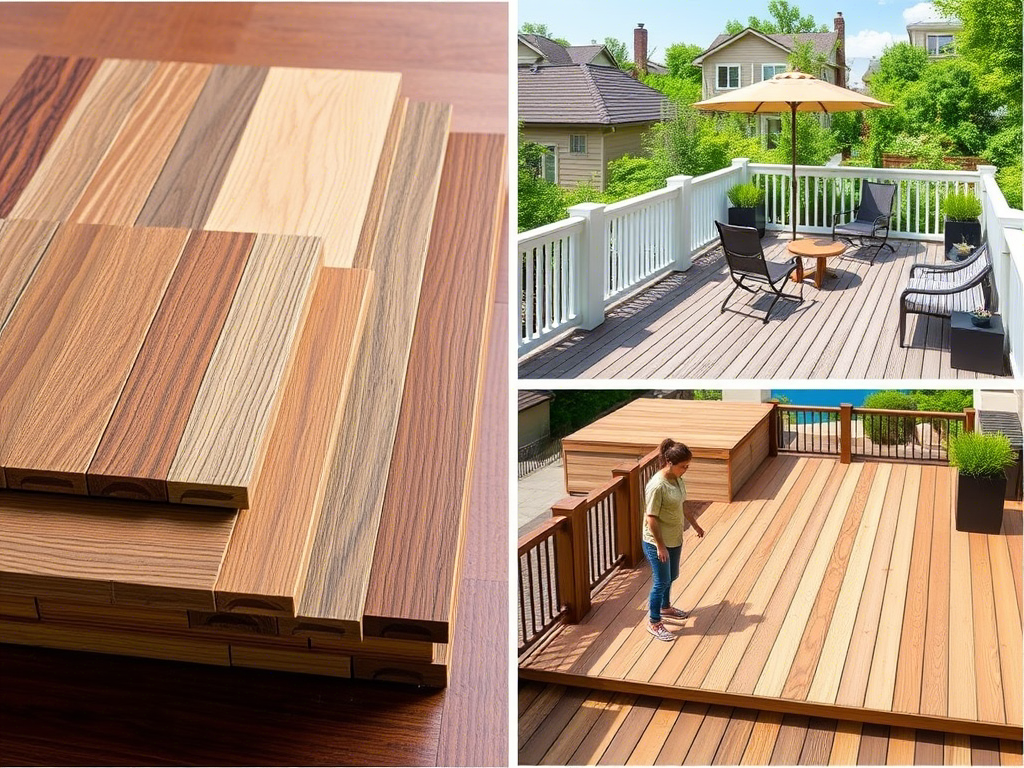
Because of their size and ground-level accessibility, decks are designed for outdoor living at scale. They can accommodate dining tables, sectional sofas, grills, fire pits, and more. For homes with gardens, pools, or large backyards, a deck creates a seamless transition between indoor and outdoor spaces. They can be single-level or multi-tiered, and work especially well on sloped lots where a flat, stable surface is needed above uneven ground.
Decks may or may not include a railing—local building codes typically require one if the platform rises more than 30 inches above the ground. Some decks are covered with a pergola or partial roof structure; to learn more about that option, see our guide on how to support a roof over a deck.
What Is a Balcony?
A balcony is a smaller elevated platform that extends from the upper floor of a building—typically the second story or higher. Rather than resting on ground-level supports, balconies are cantilevered, meaning they are anchored directly into the building's structure using brackets, bolts, or reinforced beams. This is what distinguishes a balcony from a raised deck: a balcony has no ground-level footings and is not accessible from the yard.
Access to a balcony is almost always through an interior room—most often a bedroom or a living area on an upper floor. This gives balconies an inherently private character. They are compact by nature, typically ranging from 4 to 6 feet deep, and best suited for one to four people. Think morning coffee with a view, a reading nook above the street, or a quiet spot to watch the sunset. Railings are always required on balconies for safety, and waterproofing systems are essential to protect the building structure below.
Key Differences Between a Deck and a Balcony
While both structures extend your living space outdoors, their differences go far beyond elevation. The table below summarizes the most important distinctions:
| Feature | Deck | Balcony |
|---|---|---|
| Location | Ground level or slightly elevated | Second floor or higher |
| Support System | Posts and footings in the ground | Cantilevered from the building |
| Access | Main living area + yard stairs | Interior room only |
| Typical Size | Large (200–500+ sq ft) | Compact (20–80 sq ft) |
| Railing Required | Only if 30"+ above ground | Always required |
| Best For | Entertaining, dining, family use | Private relaxation, views |
| Views | Yard-level perspective | Elevated, wider panorama |
| Weight Capacity | Higher (crowd-friendly) | Limited (2–4 people) |
One important safety note: because balconies are elevated and cantilevered, they require more rigorous structural engineering and inspection than decks. In California, for example, laws mandate periodic inspections of both decks and balconies for multifamily properties—a reminder that the elevated nature of balconies creates real risk if maintenance is neglected.
Cost Comparison: Deck vs. Balcony
Building costs vary widely depending on size, materials, and local labor rates, but the general ranges give a useful starting point. A new deck typically costs between $4,350 and $12,560, reflecting the larger footprint, foundation work, and material volume involved. A balcony, being much smaller and often added during original construction, tends to run between $600 and $2,400—making it a more accessible option upfront.
However, upfront cost is only part of the picture. Long-term maintenance costs can shift the equation significantly. Traditional wood decks require regular sealing, staining, and occasional board replacement. Balconies, due to their elevated position, need specialized waterproofing systems to protect the building below—a detail that, if ignored, can lead to expensive structural repairs. For ongoing maintenance best practices on composite surfaces, our article on composite decking maintenance covers common pitfalls and how to avoid them.
When factoring in a 10–20 year ownership horizon, the choice of material can matter more than the initial build cost.
Materials: What Are Decks and Balconies Made Of?
Traditionally, both decks and balconies have been built with natural wood—pressure-treated pine, cedar, or hardwoods like ipe. Wood offers warmth and authenticity, but it also demands consistent upkeep: annual sealing, periodic staining, inspection for rot and insect damage, and eventual board replacement as the material ages.
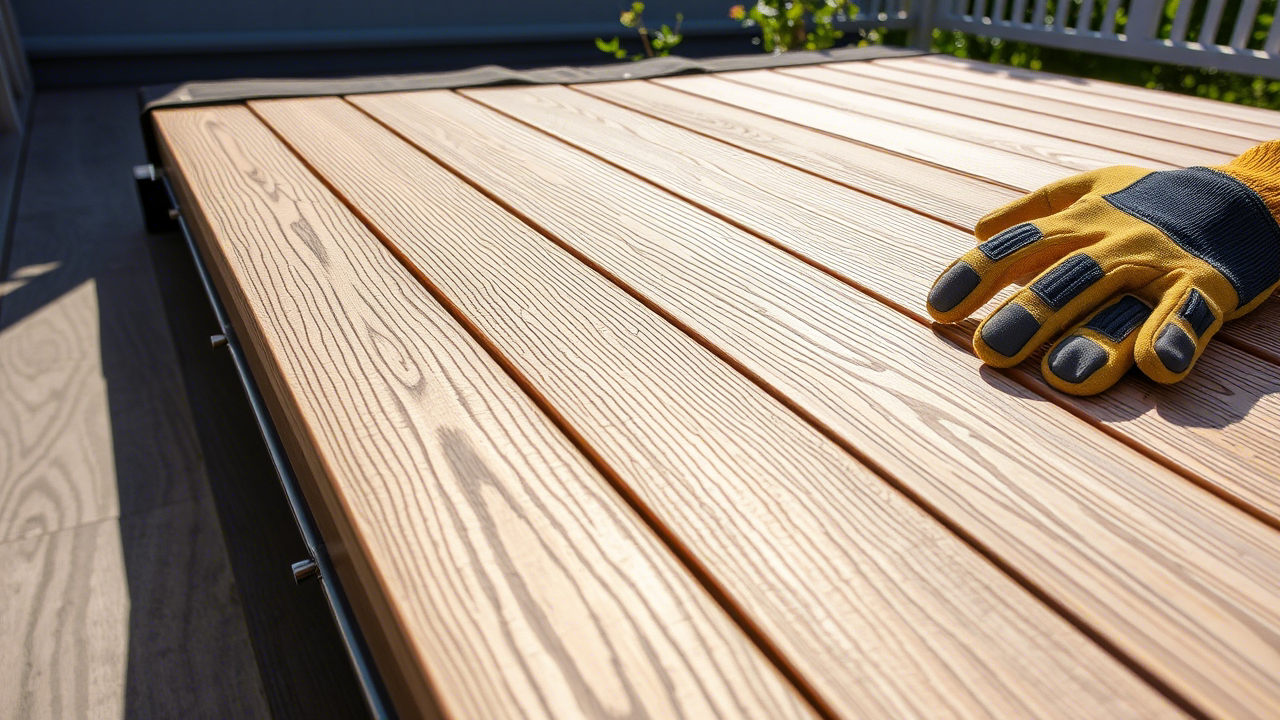
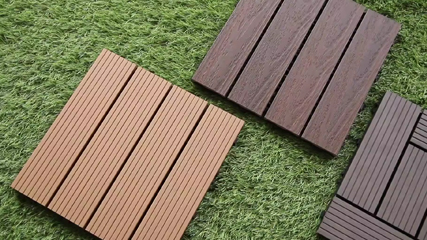
An increasingly popular alternative is WPC (Wood Plastic Composite)—a material that blends natural wood or bamboo fiber with high-density polyethylene (HDPE) plastic. WPC decking boards deliver the visual warmth of wood with dramatically reduced maintenance requirements. They resist moisture, UV degradation, warping, cracking, and insect damage without the need for painting or sealing.
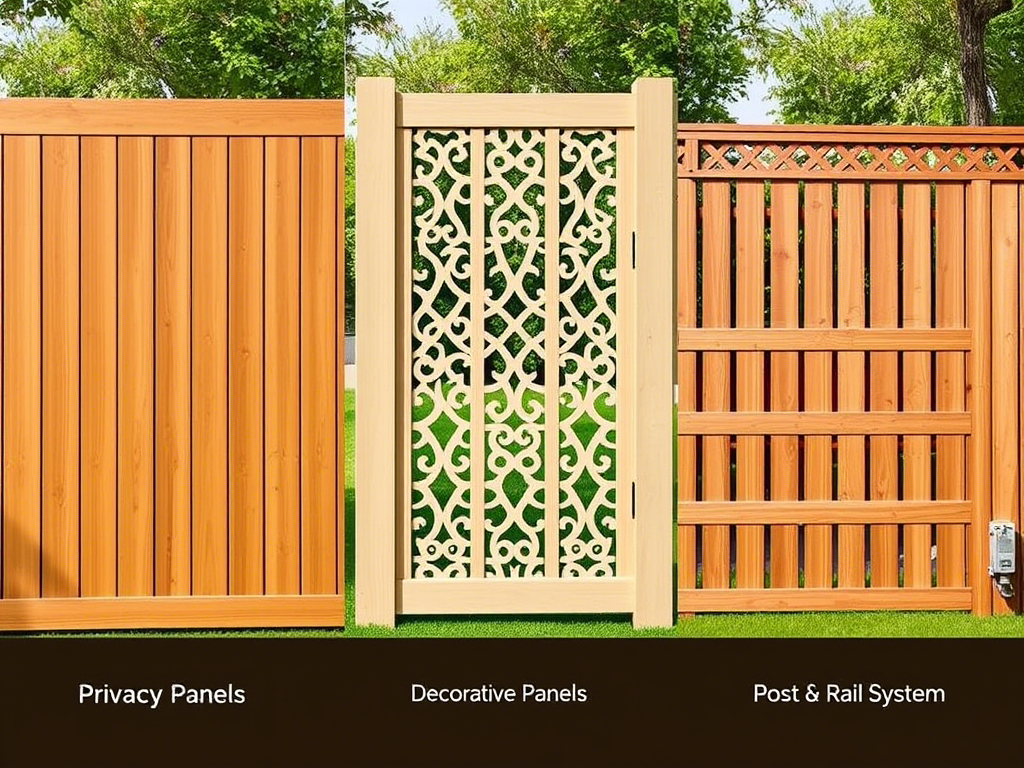
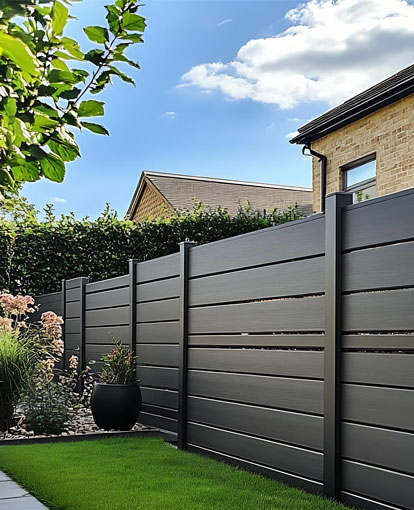
For balconies specifically, WPC is a strong choice because its resistance to moisture helps protect the structural layers beneath the surface. For decks, WPC's durability under heavy foot traffic and outdoor exposure makes it a practical long-term investment. The same material logic extends to adjacent elements like railings and fencing—our overview of WPC fence panels explains how composite materials hold up in extreme weather conditions that would damage traditional wood.
When comparing materials, consider not just appearance but the total cost of ownership: a WPC surface installed today may save significantly on maintenance over the next decade compared to untreated or even pressure-treated wood.
Which One Is Right for You?
The honest answer depends on your home's layout, how you plan to use the space, and what you can realistically budget for both installation and upkeep.
Choose a deck if:
- You have a single-story home or a ground-floor living area with backyard access
- You frequently host gatherings, outdoor dinners, or family activities
- You want a large, flexible space that integrates with the yard or garden
- You're on a sloped lot and need a level outdoor surface
Choose a balcony if:
- You live in an apartment, condo, or multi-story home with limited ground space
- You want a private retreat directly accessible from a bedroom or upper living area
- Your setting offers elevated views worth capturing—a skyline, a garden, or a landscape
- You need an outdoor space without the footprint of a full deck build
In some cases, homeowners don't have to choose—a ground-floor deck and an upper-floor balcony can coexist, each serving a distinct purpose. What matters most is matching the structure to how you actually live, not just how it looks in a catalog.
Whichever direction you go, the materials you build with will determine how that space performs over time. WPC composite boards offer a durable, low-maintenance foundation for both decks and balconies—giving you more years of enjoyment with less annual effort.