











 English
  Français
  Español


Content
- 1 Choose the Right Grill for Your Deck
- 2 Position Your Grill Correctly
- 3 Use a Grill Mat — and Use It Right
- 4 Master Two-Zone Cooking to Prevent Flare-Ups
- 5 Keep Your Grill Clean and Your Deck Protected
- 6 Safety Equipment You Should Always Have Ready
- 7 Does Your Deck Material Matter? Wood vs. WPC Composite
- 8 Quick-Reference Grilling Safety Checklist
Grill fires are not rare accidents reserved for careless cooks. According to annual fire incident data published by the National Fire Protection Association, U.S. fire departments respond to more than 11,000 home fires involving grills each year — and a significant share of those fires start right on the deck. Wood decks amplify every risk that comes with open-flame cooking: the surface is combustible, grease soaks into the grain over time, and a single overlooked ember can smolder undetected for minutes before igniting. If your deck shows any signs of heat damage or warping from past cookouts, it is worth reading about how heat cycling causes deck boards to warp and what you can do about it before firing up the grill again.
None of this means you cannot grill on a wooden deck — you absolutely can. What it means is that the margin for casual errors is smaller than most people realize. The tips below address each layer of risk in order: the grill itself, its placement, the surface protection, your cooking technique, and the safety gear you keep within reach.
Choose the Right Grill for Your Deck
Not all grills carry equal risk on a wood surface. Charcoal grills are the highest-risk option: they produce flying embers, take longer to cool, and require you to dispose of hot ash safely. If you prefer charcoal, use a chimney starter instead of lighter fluid — lighter fluid causes unpredictable flare-ups and leaves an aftertaste on food. Once the coals are fully ashed over, pour them into the grill with tongs rather than tipping the chimney directly.
Gas and propane grills are the safer choice for wooden decks. They ignite predictably, allow precise heat control, and do not produce embers. Before each season, inspect the hose connections for cracks and apply soapy water to the fittings while the gas is on — bubbles indicate a leak that must be fixed before the grill is used. Always open the grill lid fully before lighting a gas burner; a closed lid traps gas and can cause a small explosion when ignited.
Electric grills are the safest option overall and the only type permitted on many covered balconies and decks with fire code restrictions. They produce no open flame and generate minimal radiant heat at the base. The trade-off is flavor — they simply cook differently than flame-based grills.
Position Your Grill Correctly
Where you place the grill matters as much as what type of grill you use. The Consumer Product Safety Commission recommends a minimum of 10 feet between your grill and any structure — walls, railings, eaves, or siding. Many decks make that distance difficult to achieve, which is exactly why grill placement should be planned before the first cookout of the season, not improvised on the day.
- Keep clear of railings. Railings are often the closest combustible surface to a grill, and grease splatter can coat them over multiple sessions. Position the grill away from any railing by at least 8–10 feet, or as far as your deck geometry allows.
- Watch for overhead hazards. Overhanging tree branches, fabric pergola covers, and roof eaves can catch a spark or accumulate enough radiant heat to ignite. Grilling under any overhead structure without proper ventilation is not advisable.
- Account for wind direction. Check which way the wind is blowing before you open the grill lid. Wind pushes flames and embers toward whatever is downwind — which could be your house wall or a stack of deck furniture.
- Keep a clear path. Make sure there is always an unobstructed route away from the grill. Crowded deck furniture arrangements can trap you near the heat if something goes wrong.
Use a Grill Mat — and Use It Right
A fire-resistant grill mat is one of the most effective single investments you can make when grilling on wood. It serves three functions at once: it catches grease drips before they soak into the wood grain, it shields the deck surface from radiant heat that can dry out and crack the boards over time, and it provides a barrier against stray embers from charcoal setups.
Choose a mat that extends at least six inches beyond the perimeter of your grill on all sides. Size matters because the majority of grease splatter and falling debris lands just outside the grill footprint, not directly beneath it. Look for mats rated for temperatures above 500°F — many entry-level mats are rated for far less and can curl or melt under sustained heat. Clean the mat after every session; a grease-saturated mat provides no protection and can become a fuel source itself.
For charcoal grills, consider adding a non-flammable pad beneath the mat as a secondary layer. The combination handles both the direct heat from the grill legs and any embers that escape through vents at the bottom of the firebox.
Master Two-Zone Cooking to Prevent Flare-Ups
Flare-ups — those sudden bursts of flame caused by fat dripping directly onto the heat source — are the most common ignition event during a cookout. On a wooden deck, a flare-up that escapes the grill can reach the surface in seconds. Two-zone cooking is the most practical technique for keeping flare-ups under control.
The method is straightforward: set up one side of the grill as a direct, high-heat zone and the other as an indirect, lower-heat zone. Cook fatty cuts over direct heat only long enough to develop the sear you want, then move them to the indirect side to finish cooking through. If a flare-up occurs, close the lid immediately and slide the food to the cooler side. Cutting off oxygen collapses most flare-ups within seconds without requiring you to reach across the flames.
A drip pan placed on the cool side of the grill catches rendered fat before it can fall onto the heat source. Empty and clean the drip pan after every session — a full pan is a fire risk on its own.
Keep Your Grill Clean and Your Deck Protected
Grease buildup is the leading cause of grill fires, and it accumulates faster than most people expect. Clean the grates after every use while the grill is still warm — a wire brush removes residue easily at temperature. Deep-clean the grease trap and burner covers at least once a season, or more frequently if you cook fatty proteins regularly.
The deck surface itself also needs attention after cooking sessions. Grease that lands on untreated wood soaks in and creates a persistent fire hazard that no grill mat can fully prevent at the edges. After the grill is cool and put away, wash the surrounding deck area with warm water and a mild soap. For stubborn grease stains on composite or treated surfaces, there are effective methods detailed in this guide to cleaning and removing grease stains from outdoor deck surfaces. Keeping the deck clean is not just about aesthetics — it is a direct fire risk reduction measure.
Store propane tanks outdoors, away from direct sunlight and heat sources. Never store a spare tank in a garage, shed, or enclosed space. Charcoal ash should be fully cooled — typically 48 hours — before disposal in a metal container with a lid.
Safety Equipment You Should Always Have Ready
No safety routine is complete without the right equipment staged and accessible before you light the grill — not retrieved in a panic after something goes wrong.
- Fire extinguisher. Keep a Class B or ABC dry-chemical extinguisher within arm's reach of the grill. Check the pressure gauge at the start of each season. Never use water on a grease fire — water causes burning oil to splatter and spread the flame rapidly.
- Long-handled tools. Standard kitchen utensils put your hands within inches of the flame. Grilling tools with 16-inch or longer handles keep you at a safe distance while maintaining full control over what is on the grate.
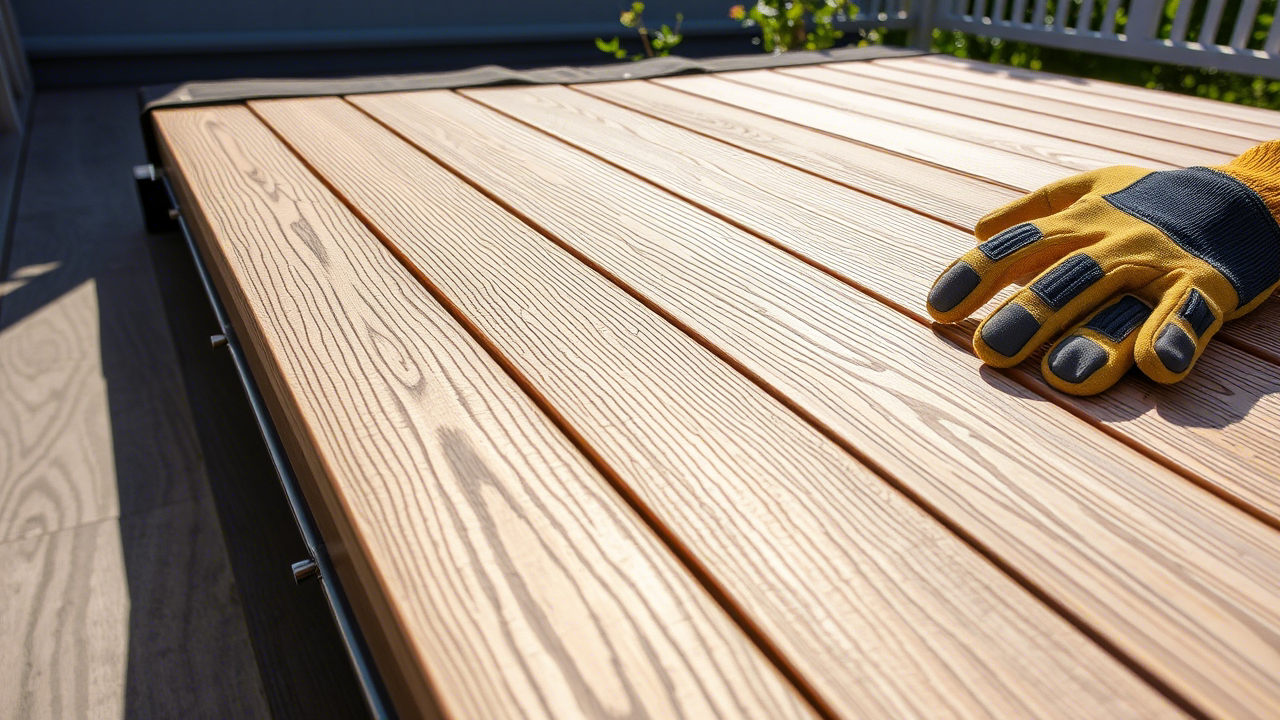
- Heat-resistant gloves. Grill gloves rated for 500°F or above protect against both direct flame contact and the radiant heat that builds up around the grill during a long cook session.
- A clear safety zone. Establish a three-foot perimeter around the grill and enforce it with children and pets. Consider a portable safety gate for households with toddlers. Burn injuries from contact with the grill body — not just the flames — account for a significant share of pediatric ER visits each summer.
- Never leave the grill unattended. This is the rule most frequently broken and most frequently cited in post-incident reports. If you need to step inside, take the food off the heat first.
Does Your Deck Material Matter? Wood vs. WPC Composite
Traditional wood decks — pressure-treated pine, cedar, redwood — are combustible by nature. Over time, sun exposure dries out the wood fibers, reducing their natural moisture content and making them increasingly susceptible to ignition from a dropped ember or a sustained heat source. Weathered, dried-out boards also absorb grease more readily, which compounds the risk with each passing season.
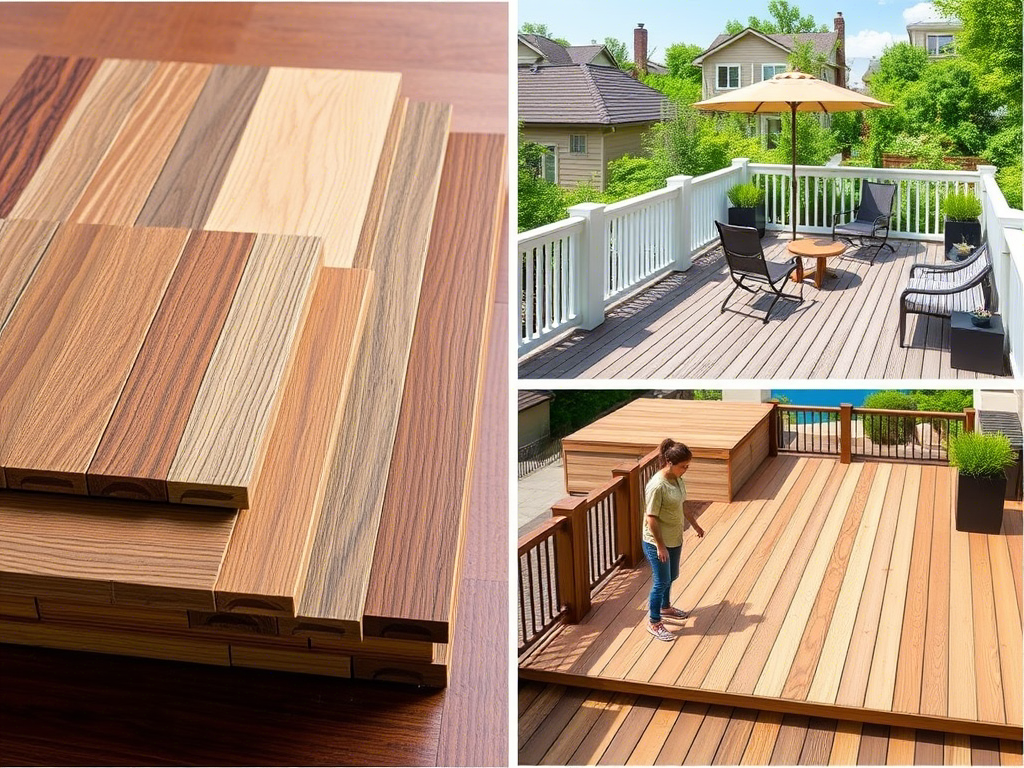
WPC (Wood Plastic Composite) decking is a meaningfully different material. It combines wood fiber with high-density polyethylene (HDPE) and chemical stabilizers that slow ignition and reduce surface flammability compared to bare lumber. WPC does not eliminate fire risk — no decking material does — but it is more resistant to heat marking, does not absorb grease into its core, and is far less likely to catch a stray ember. The surface is also easier to clean after cookouts, since the composite structure does not have the open grain that traps carbonized grease in wood.
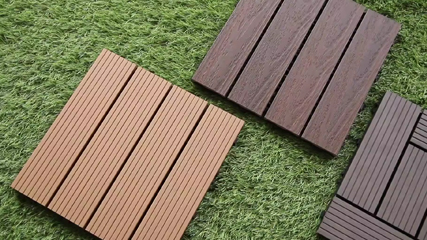
If you are building or upgrading a deck and plan to use it regularly for grilling, it is worth considering WPC composite decking boards engineered for outdoor durability and heat resistance. For homeowners who want flexibility without a full deck replacement, interlocking WPC deck tiles as a modular surface upgrade can be installed over an existing deck to create a more fire-resistant grilling zone without a full renovation. At the premium end, co-extrusion WPC decking with a protective outer shell layer offers the highest surface resistance to staining, heat marking, and moisture penetration among composite options.
Deck material is not a substitute for safe grilling practice — it is one additional layer of protection in a system that includes proper grill placement, a quality mat, clean equipment, and good technique. Used together, these measures make outdoor cooking on a deck a genuinely low-risk activity.
Quick-Reference Grilling Safety Checklist
| Category | Check |
|---|---|
| Grill Setup | Grill positioned ≥10 ft from any structure |
| Grill Setup | No overhead branches, eaves, or fabric covers above grill |
| Grill Setup | Grill mat in place and clean |
| Gas Grill | Hose and connections checked for leaks with soapy water |
| Gas Grill | Lid fully open before ignition |
| Charcoal Grill | Chimney starter used (no lighter fluid) |
| Charcoal Grill | Drip pan in place under cool cooking zone |
| Safety Gear | Class B/ABC fire extinguisher within arm's reach |
| Safety Gear | Long-handled tools and heat-resistant gloves ready |
| Surroundings | 3-foot safety perimeter established; children and pets outside it |
| After Cooking | Grill cleaned while still warm; drip pan emptied |
| After Cooking | Deck surface wiped down for grease splatter |
| After Cooking | Propane stored outdoors; charcoal ash cooling in metal container |